Vaccinations Log Book KDP Interior
A well-structured, production-ready interior file is the backbone of any successful low-content book on Amazon KDP — especially in high-demand, evergreen niches like health tracking. The Vaccinations Log Book KDP Interior stands out not because it’s flashy or over-engineered, but because it solves a specific, recurring problem for KDP publishers: launching a functional, compliant, and professionally formatted log book with minimal overhead.
What It Is — And Why It Matters
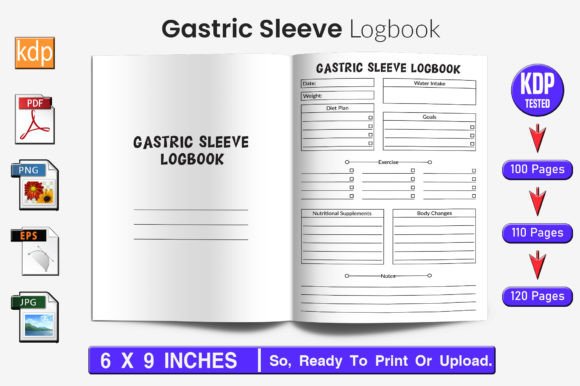
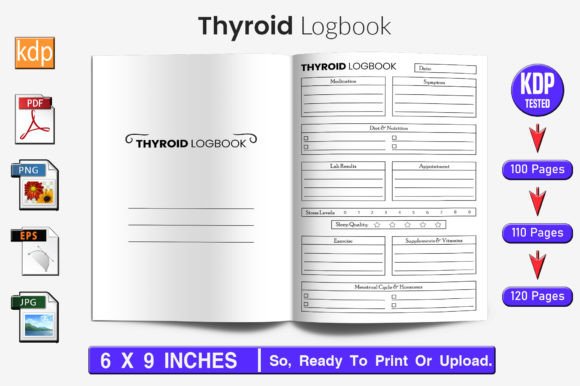
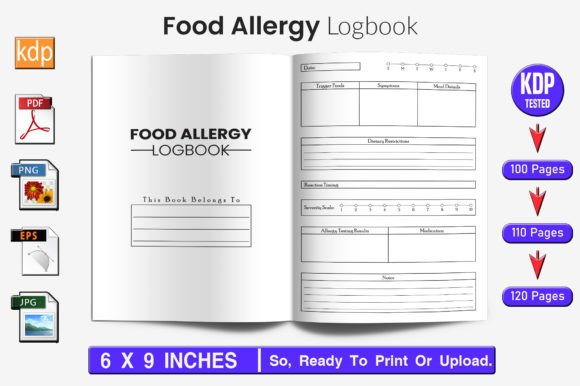
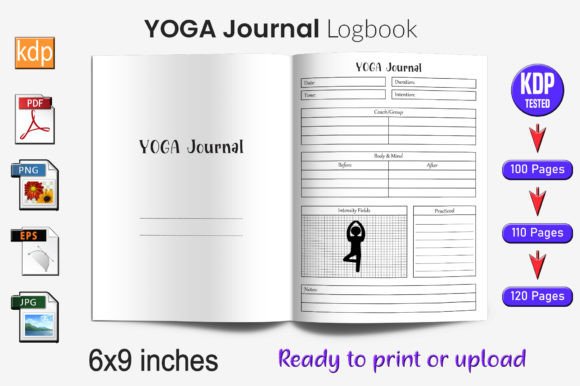
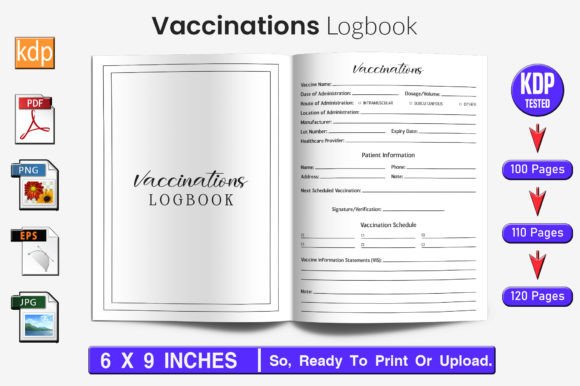
This isn’t a template you build from scratch or a generic PDF you hope passes KDP’s preflight checks. The Vaccinations Log Book KDP Interior is a 100-page (with optional 110- and 120-page variants) print-ready interior designed explicitly for vaccination record keeping. It includes clean, consistent layouts — one entry per page or grouped by dose type — with space for date, vaccine name, manufacturer, lot number, administering provider, and notes. Crucially, it was tested live on Amazon KDP: uploaded, reviewed, approved, and verified at 300 DPI with no bleed, 6×9 trim size, and correct margins.
That testing step matters. Many free or low-cost interiors fail silently during upload — misaligned gutters, embedded fonts flagged as non-embeddable, or resolution warnings that delay publishing. This interior avoids those pitfalls. Its reliability saves time, reduces revision cycles, and supports faster iteration — a practical advantage when scaling a low-content catalog.
Design Flexibility Without Compromise
Unlike raster-based PDFs that pixelate when resized, this interior is built from vector source files (EPS), fully editable in Adobe Illustrator. You can adjust spacing, modify headers, change font weights, or reposition elements — all without quality loss. That flexibility serves multiple real-world needs:
- Branding alignment: Insert your logo or custom title font to match existing series aesthetics.
- Regional adaptation: Swap “Vaccination” for “Immunization” or add bilingual fields for international audiences.
- Workflow integration: Resize pages to fit alternative trim sizes (e.g., 5.5×8.5) if expanding into companion formats — though the 6×9 version remains the most widely adopted for journal-style books.
Also included are transparent-background PNGs and high-res JPGs — useful for mockups, social media previews, or A+ Content visuals. These aren’t afterthoughts; they’re part of a cohesive asset package meant to support both production and marketing.
Quality and Consistency Across Formats
The interior delivers uniform typography, balanced white space, and sufficient line height — subtle details that affect readability and perceived professionalism. At 300 DPI, text remains crisp even under close inspection, and the absence of bleed simplifies printing logistics for both KDP and third-party POD partners. There are no placeholder graphics, inconsistent borders, or orphaned page numbers. Every page follows the same structural logic, which helps users form habits — an important factor in log book usability.
From a production standpoint, consistency also reduces cognitive load during editing. If you’re managing dozens of interiors across categories (medication logs, symptom trackers, pediatric growth charts), having a predictable layout language speeds up QA and batch updates. This interior doesn’t try to be everything — it focuses on doing one thing well: supporting accurate, organized vaccination documentation.
Who Benefits Most — And How
The primary audience isn’t end users — it’s KDP publishers building scalable, low-maintenance catalogs. That includes:
- Entrepreneurs running micro-publishing businesses who prioritize speed-to-market and repeatable workflows.
- Educators or healthcare communicators creating supplemental tools for clinics, schools, or community outreach programs — where clarity and compliance matter more than novelty.
- Freelance designers or content developers who resell or co-brand interiors for clients needing HIPAA-aware (though not certified) documentation aids.
- Bloggers or wellness creators extending their authority through practical, printable resources — often bundled with email opt-ins or course modules.
It’s less suited for publishers seeking highly illustrated, narrative-driven, or interactive interiors — this isn’t a coloring book or guided journal. Its strength lies in utility, not embellishment. For example, a pediatric practice owner might use it as a giveaway — branded with their clinic name and contact info — reinforcing trust while collecting zero PII. A freelance medical writer could integrate it into a broader “Parent’s Health Toolkit” bundle, knowing the interior meets baseline formatting standards before upload.
Realistic Considerations and Limitations
No interior is universally optimal — context determines fit. The Vaccinations Log Book KDP Interior assumes standard U.S.-centric terminology and scheduling conventions (e.g., DTaP, MMR, HPV). Publishers targeting non-U.S. markets may need to adjust dose intervals, regulatory references, or unit labels (e.g., mL vs. cc). While the vector files allow those edits, they require basic Illustrator familiarity — not a barrier, but a prerequisite.
It also doesn’t include digital functionality: no QR codes linking to CDC guidelines, no fillable PDF layers, and no auto-calculating age-based dose reminders. Those features belong in premium or hybrid products. This interior stays focused on print-first, analog-friendly use — which remains the dominant expectation for vaccination logs among caregivers and providers.
Another practical note: while the 100-page version suits most individual use cases, the 120-page variant offers more breathing room for detailed notes or multi-child tracking. Choosing between them depends on your target reader’s likely usage pattern — not just page count preference, but how much contextual detail they’ll want to capture per dose.
Long-Term Value Beyond the First Upload
Because it’s built on vector foundations and tested against KDP’s current requirements, the Vaccinations Log Book KDP Interior supports iterative improvement. You can create derivatives — adding seasonal flu tracker pages, integrating travel-vaccine checklists, or producing a condensed “Infant Dose Schedule” companion — all while maintaining visual continuity. That modularity extends shelf life, especially as public health guidance evolves.
More importantly, it reinforces a disciplined approach to low-content publishing: start with a validated foundation, then layer on differentiation through branding, bundling, or audience-specific messaging — not speculative design experiments. In a category where thousands of similar log books compete on visibility alone, reliability becomes a quiet differentiator.
If your goal is to publish faster, reduce upload friction, and maintain consistency across health-tracking titles, the Vaccinations Log Book KDP Interior delivers measurable workflow value — not hype, not shortcuts, but a practical tool shaped by actual KDP constraints and user needs.