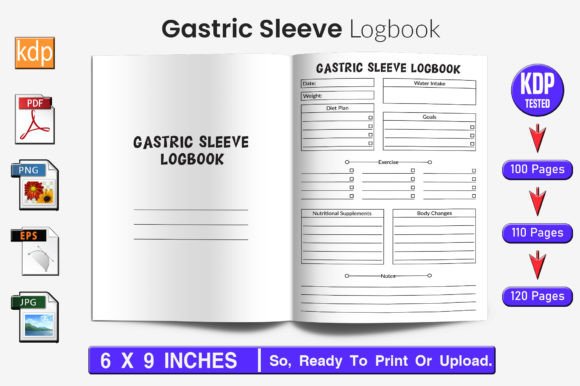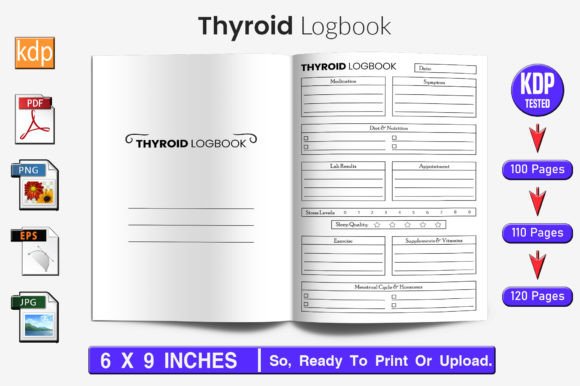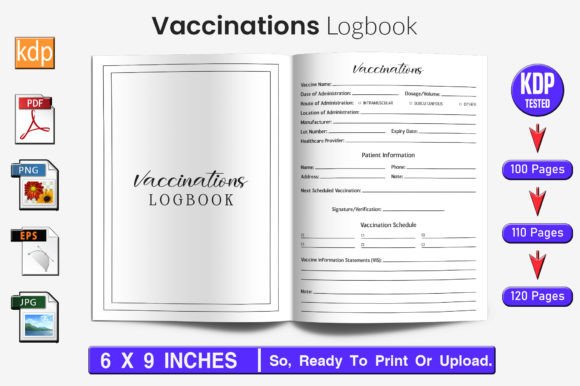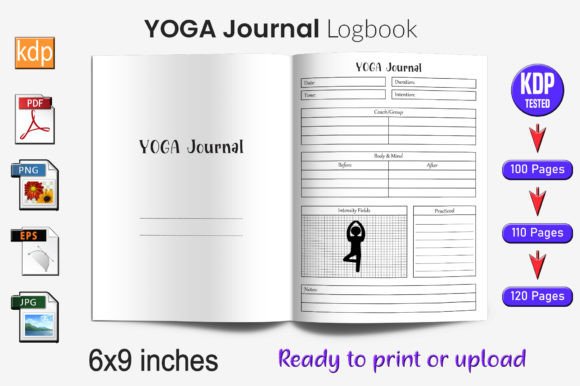
Food Allergy Log Book KDP Interior
If you're building a low-content publishing business on Amazon KDP—and especially if you're focused on health, wellness, or caregiver resources—the Food Allergy Log Book KDP Interior is more than just another template. It’s a purpose-built, production-ready interior file designed to reduce friction in your publishing workflow while delivering real utility to end users. Unlike generic journal interiors, this one was developed with both creator efficiency and reader functionality in mind—tested thoroughly on KDP to ensure compatibility, print fidelity, and usability.
Why This Interior Stands Out for Health-Focused Low-Content Publishing
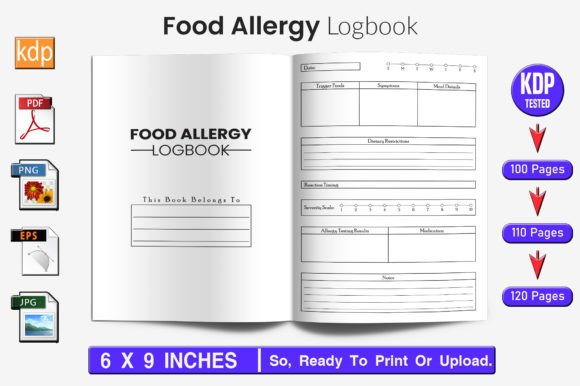
Most food allergy journals on Amazon share similar layouts: basic date fields, space for meals, and symptom tracking. What makes the Food Allergy Log Book KDP Interior different is its intentional design for scalability and adaptability. With 100 vector-based, fully editable pages—available in 100-, 110-, and 120-page versions—you’re not locked into a single format. Need to adjust spacing for younger users? Expand columns for detailed allergen cross-reference notes? Resize headers for clearer readability by older adults? The EPS source files let you do all of that in Adobe Illustrator without pixelation or quality loss.
This matters because health-related log books often serve diverse audiences: parents tracking reactions in toddlers, teens managing school lunches independently, adults newly diagnosed with multiple sensitivities, or caregivers supporting elderly relatives. A rigid, non-editable PDF forces compromises—either sacrificing clarity for compactness or losing structure when scaling up. Here, the vector foundation means every change preserves sharpness at any size, and the 6×9 trim size aligns with KDP’s most widely adopted paperback dimension—making it easy to pair with matching covers and avoid formatting rejections.
Real-Time Workflow Benefits for Publishers
Time is the most consistent bottleneck for low-content creators juggling multiple titles. The Food Allergy Log Book KDP Interior eliminates several repetitive steps. First, it includes bleed-free, 300 DPI print PDFs—ready to upload directly to KDP without preflight checks or resizing. Second, the bonus high-resolution JPG and transparent-background PNG files aren’t just extras; they’re practical assets for creating compelling Amazon thumbnails, social media teasers, or email newsletter visuals—no need to hire a designer for basic marketing assets.
For publishers running tight margins, even small efficiencies compound. Consider this: instead of spending 45 minutes troubleshooting KDP upload errors caused by incorrect bleed settings or low-DPI exports, you upload the tested interior and move on to optimizing your title, description, and backend keywords. That same hour could be spent researching seasonal allergy trends (e.g., back-to-school or holiday baking triggers) to inform your next niche journal—like a “Gluten-Free Holiday Meal Tracker” or “Pediatric EpiPen Response Log.”
Who Gains the Most—and Why
Small business owners launching a health-focused low-content brand benefit most—not because the interior is flashy, but because it’s reliable. Educators developing classroom materials for nutrition units can adapt the layout to include discussion prompts or allergy-awareness checklists. Freelance designers offering white-label journal services use the EPS files to customize branding elements (fonts, color accents, logo placement) without rebuilding from scratch. Bloggers and registered dietitians who sell digital tools alongside their content find this interior bridges the gap between free downloadable PDFs and premium-printed resources—offering customers a tangible, organized way to apply advice.
That said, it’s not ideal for every use case. If you need interactive digital features—like hyperlinked symptom glossaries or embedded video tutorials—this remains a print-first interior. Likewise, if your audience prefers larger formats (8.5×11) or requires braille-ready layouts, you’ll need to supplement or modify beyond the included files. But for standard 6×9 paperbacks targeting general consumers, clinicians’ waiting rooms, or school nurse offices, the balance of flexibility, compliance, and readiness is hard to match.
How It Supports Better Tracking—Without Overcomplicating
A well-designed log book does more than collect data—it guides reflection. The Food Allergy Log Book KDP Interior includes thoughtfully spaced sections: meal time, food consumed (with room for brand names and preparation methods), observed symptoms (categorized as mild/moderate/severe), timing relative to ingestion, and notes on interventions used. That structure helps users spot patterns faster—say, noticing that dairy-triggered hives consistently appear within 90 minutes, but only when combined with stress or lack of sleep.
This isn’t theoretical. Parents using structured logs report higher confidence during pediatrician visits, and allergists confirm that detailed, consistent records improve diagnostic accuracy and treatment planning. For creators, that translates to stronger perceived value: readers don’t just buy a notebook—they invest in a tool that supports safer daily decisions.
Practical Tips for Getting Started
- Start narrow, then expand: Launch with the 100-page version to test demand before adding 110- or 120-page variants with expanded symptom charts or bilingual labels (e.g., English/Spanish food terms).
- Leverage the transparency: Use the transparent PNG files to overlay custom cover text or add subtle watermarks for brand consistency across your catalog.
- Pair with complementary content: Bundle this interior with a short guide—“5 Common Pitfalls in Food Allergy Tracking”—as a free download to build your email list.
- Validate before scaling: Upload one version, order a proof copy, and review physical page weight, contrast, and line spacing under natural light—not just on screen.
The Food Allergy Log Book KDP Interior doesn’t promise overnight bestsellers. What it delivers is something quieter but more sustainable: fewer technical setbacks, clearer user outcomes, and the ability to iterate based on real feedback—not guesswork. In a marketplace where consistency and reliability separate steady earners from one-off sellers, that kind of foundation matters more than ever.