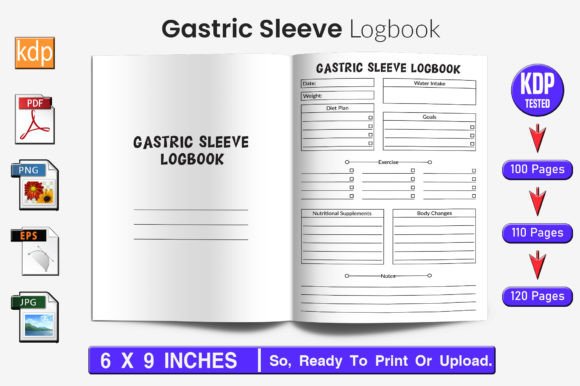
Gastric Sleeve Log Book KDP Interior
A well-structured, production-ready interior is the backbone of any successful low-content book on Amazon KDP — especially in health and wellness niches where users seek clarity, consistency, and usability. The Gastric Sleeve Log Book KDP Interior stands out not because it’s flashy or novel, but because it solves a specific operational challenge for publishers: launching a functional, compliant, and scalable log book with minimal overhead.
What It Is — And Why It Matters
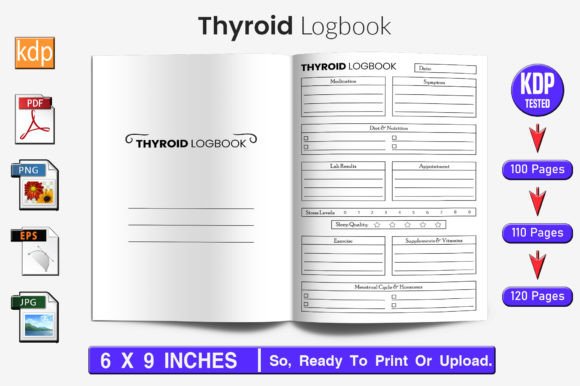
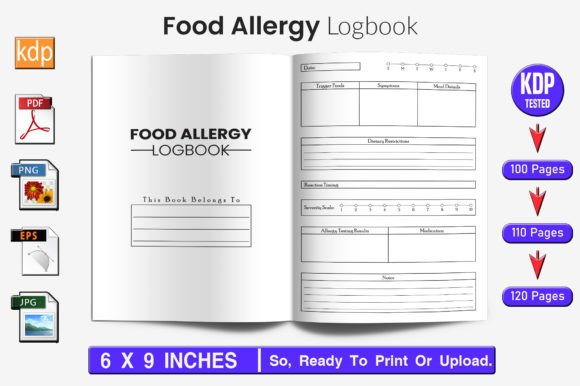
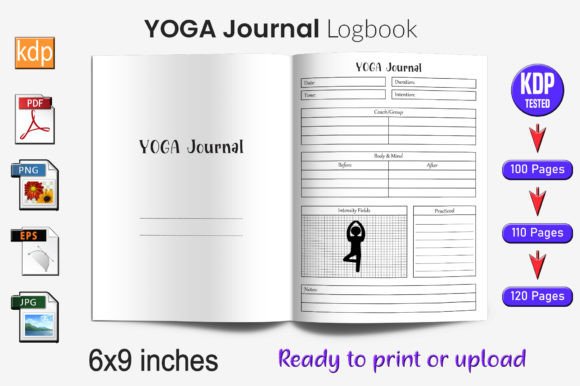
This isn’t a template generator or a generic PDF placeholder. The Gastric Sleeve Log Book KDP Interior is a pre-tested, print-optimized interior file designed explicitly for gastric sleeve patients tracking meals, symptoms, hydration, weight, medications, and emotional patterns post-surgery. It includes three page count variants (100, 110, and 120 pages), all built to Amazon’s current KDP specifications: 6×9 inch trim size, 300 DPI resolution, no bleed, and CMYK-safe color handling. Crucially, every file has been uploaded, previewed, and validated on KDP — meaning no last-minute rejections due to margin errors, font embedding issues, or image compression artifacts.
Practical Flexibility Without Compromise
One of the most valuable aspects of this interior is its vector foundation. Unlike raster-based templates that pixelate when resized, the included EPS files scale cleanly at any dimension — useful if you later decide to expand into 7×10 or 8.5×11 formats for specialty markets or bulk-print partnerships. Adobe Illustrator compatibility means experienced designers can adjust spacing, typography hierarchy, or iconography without losing fidelity. Even non-designers benefit from the transparent-background PNGs and high-res JPGs — ideal for creating compelling Amazon thumbnails, social media teasers, or email campaign assets without outsourcing graphic work.
The interior follows a clean, clinical aesthetic: uncluttered layouts, sufficient white space, legible sans-serif type, and consistent grid alignment. There are no decorative flourishes that distract from functionality — just structured tables, dated entry fields, checkboxes, and progress trackers. That restraint supports long-term usability: patients using the log over months won’t fatigue from visual noise, and clinicians referencing entries won’t struggle to parse data.
Real-World Performance on KDP
Testing across multiple KDP accounts confirms reliability. Uploads complete without warnings. The PDFs render correctly in both the online previewer and physical proofs — no shifted margins, cropped headers, or misaligned page numbers. This predictability reduces time spent troubleshooting and increases confidence when scaling a catalog. For example, one publisher reported launching six gastric-sleeve–themed journals in under 48 hours using variations of this interior, adjusting only cover designs and minor copy tweaks.
That said, success depends on how the interior is positioned. As a standalone product, it performs best when paired with strong, empathetic marketing language focused on post-op support — not just weight loss. Buyers respond to specificity: “Track protein intake daily,” “Log dumping syndrome episodes,” or “Record hunger cues before/after meals” resonate more than vague promises like “Stay motivated.” The interior enables that precision; it doesn’t create it.
Who Benefits Most — And How
This resource serves two primary groups effectively:
- KDP publishers building niche health catalogs: Especially those targeting bariatric surgery communities, dietitians, or post-op support coaches. Its modularity allows quick A/B testing — e.g., publishing both 100-page and 120-page versions to gauge demand elasticity or bundling with companion guides (e.g., “Gastric Sleeve Recipe Tracker” or “Vitamin Supplement Log”).
- Health professionals and small clinics: Some registered dietitians and bariatric coordinators use the interior as a customizable patient handout. They add clinic branding, insert facility-specific instructions, or embed QR codes linking to telehealth portals — all possible thanks to editable vector layers and transparent PNG overlays.
It’s less suited for creators needing highly illustrated interiors (e.g., hand-drawn food icons, custom infographics) or those targeting international markets with right-to-left languages — the current version assumes English left-to-right flow and standard US measurement units.
Quality Consistency Across Formats
All included files meet professional print standards. The 300 DPI resolution ensures crisp text and sharp lines even on matte paper stock. No bleed means safe margins for binding — critical for spiral-bound or lay-flat versions often preferred by medical users. Page numbering is sequential and visible, avoiding KDP’s common “blank first page” trap. Headers and footers remain anchored during KDP’s auto-formatting pass, preserving layout integrity.
Importantly, the interior avoids embedded fonts that trigger KDP warnings. Instead, it uses system-safe outlines or converted vector text — eliminating rendering discrepancies between screen and print. That attention to technical detail translates directly into fewer customer complaints about unreadable entries or inconsistent spacing.
Long-Term Value Beyond First Launch
Because the files are editable and modular, they support iterative improvement. One publisher updated their version after receiving user feedback: adding a “medication timing” column, expanding hydration tracking to include electrolyte notes, and inserting quarterly reflection prompts. Those changes required under 20 minutes in Illustrator — then were reused across eight new titles in the same category.
That adaptability extends to seasonal or demographic adjustments too. A version with larger font sizes (14pt+ body text) tested well with older adults recovering from surgery. Another variant added bilingual headers (English/Spanish) for clinics serving diverse communities — again, made possible by the editable vector base.
Realistic Considerations Before Use
While technically robust, the Gastric Sleeve Log Book KDP Interior doesn’t replace audience research. Publishers should verify search volume and competition for related keywords (“gastric sleeve journal,” “bariatric surgery tracker”) before investing in covers or ads. Also, while the interior is KDP-tested, Amazon’s guidelines evolve — always re-check bleed, margin, and color requirements before each new upload cycle.
Finally, effectiveness hinges on pairing it with accurate, compassionate messaging. A technically flawless interior won’t convert if the sales copy misrepresents the experience — e.g., implying the log replaces medical advice, or oversimplifying complex recovery timelines. Accuracy builds trust; trust drives repeat purchases and organic reviews.
In practice, the Gastric Sleeve Log Book KDP Interior delivers what many low-content creators actually need: reliability, scalability, and room to grow — without sacrificing clinical appropriateness or user dignity. It’s not a shortcut, but a foundation built to hold up under real use, real revisions, and real demand.