Dream Life Self Care Journal Canva KDP: A Practical Guide for Creators and Self-Care Planners
The Dream Life Self Care Journal Canva KDP is a ready-to-publish interior template designed specifically for Amazon Kindle Direct Publishing (KDP). It’s not a pre-filled journal or a subscription service — it’s a professionally structured, editable Canva-based resource intended for self-publishers, coaches, therapists, wellness entrepreneurs, and independent creators who want to launch a high-quality self-care journal without building from scratch.
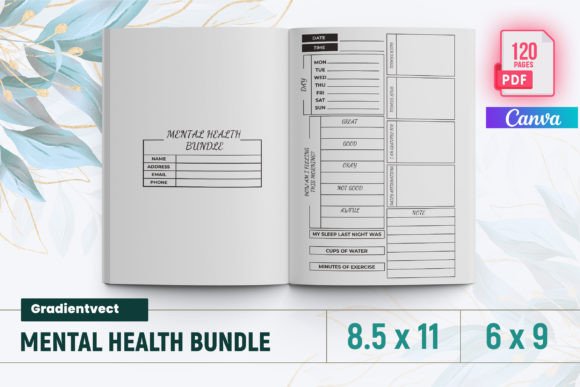
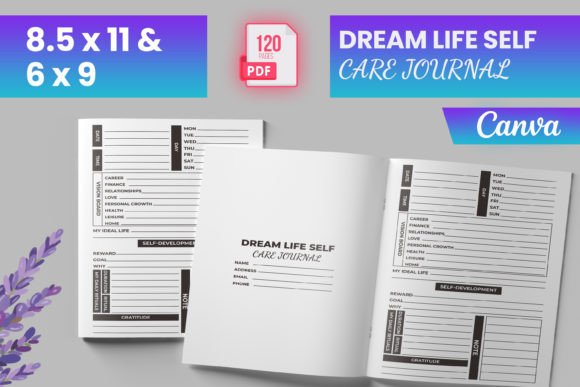
What sets the Dream Life Self Care Journal Canva KDP apart is its dual-purpose design: it serves both as a functional tool for personal reflection and as a production-ready KDP asset. The interior includes 120 pages across standard US trim sizes (6″ × 9″, 8.5″ × 11″), with bleed built in per Amazon’s specifications. Every page has been tested on KDP to avoid common formatting pitfalls like misaligned margins, missing bleeds, or color shifts — issues that often delay or derail first-time uploads.
How It Fits Into the Broader Landscape of Self-Care Journaling Resources
Self-care journals fall into several overlapping categories: printable PDFs, Notion or GoodNotes templates, physical workbooks, and KDP-published paperbacks. The Dream Life Self Care Journal Canva KDP sits squarely in the last category — but with an important twist. Unlike static PDF journals sold on Etsy or Gumroad, this template is optimized for Amazon’s print-on-demand ecosystem. Unlike generic Canva journal templates found in free design libraries, it includes intentional structure for mindset work: sections like “Limiting Beliefs,” “Mindset Reset,” “My Ideal Life Vision Board,” and “Gratitude Bucket List” reflect evidence-informed frameworks used in cognitive behavioral coaching and positive psychology practice.
Compared to building a journal from scratch in Canva or Adobe InDesign, the Dream Life Self Care Journal Canva KDP saves significant time on layout consistency, typography hierarchy, and KDP compliance. Compared to hiring a designer, it offers full editing control at a fraction of the cost — though it does require basic familiarity with Canva’s interface and KDP’s upload workflow.
What’s Included — And Why Each Element Matters
The package delivers seven key components, each serving a specific function in the publishing process:
- Ready-to-upload PDF file: Fully formatted with bleed, embedded fonts, and CMYK-safe colors — no post-processing needed before KDP submission.
- Multiple trim sizes: Covers the three most common paperback dimensions used by wellness journals on Amazon (6″ × 9″, 8.5″ × 11″), giving creators flexibility based on audience preference and content density.
- 120 total pages: Includes an intro page plus thematic spreads — not filler. Pages are purpose-built: “Where Am I Now?” invites honest self-assessment; “My Top Goals” supports goal clarity; “My 10 Affirmations” scaffolds daily mindset reinforcement.
- KDP-tested files: Confirmed to pass Amazon’s automated preflight checks, reducing the risk of rejection due to margin errors or resolution mismatches.
- PNG and JPG source files: Allow for selective edits — for example, updating cover art, swapping icons, or adjusting background textures without altering layout integrity.
- Bleed-ready interior: Critical for professional edge-to-edge printing. Many DIY KDP interiors omit this, resulting in unintended white borders around images or colored backgrounds.
- Thematic cohesion: Sections like “Wishes & Desires,” “Milestone Mapping,” and “Gratitude Journal Daily Planner” aren’t randomly assembled — they follow a progression from awareness to intention to action.
Strengths and Real-World Tradeoffs
One strength of the Dream Life Self Care Journal Canva KDP is its balance between structure and adaptability. Users can personalize affirmations, shift milestone timelines, or reframe limiting beliefs — all while maintaining visual consistency. That makes it especially useful for practitioners offering branded journaling tools to clients, or for authors developing a series of related workbooks.
However, it’s not universally suited for every use case. For instance, if you need heavy interactivity — clickable tabs, hyperlinked table of contents, or embedded audio prompts — this isn’t the right format. It’s also not ideal for readers seeking guided instruction; there are no teaching notes, explanations, or facilitator scripts included. The value lies in the framework, not the pedagogy.
Another tradeoff involves customization depth. While Canva allows text and color changes, modifying grid layouts, adding new page types, or integrating custom illustrations requires intermediate design skills. Someone expecting drag-and-drop complexity akin to a website builder may find the learning curve steeper than anticipated — particularly when aligning elements across multiple page sizes.
When This Template Is the Right Choice
The Dream Life Self Care Journal Canva KDP fits best when you’re aiming to publish a polished, thematically unified journal on Amazon — and you already have a clear idea of your audience’s needs. For example:
- A life coach launching a companion workbook for a “30-Day Mindset Reset” program might use this template to build a client-facing journal aligned with their curriculum — adding their logo, tweaking affirmations, and uploading directly to KDP within hours.
- An artist or writer exploring passive income through low-content books could adapt the “Vision Board” and “Wishes & Desires” pages into a niche version — say, “Creative Dream Life Journal for Writers” — leveraging the existing structure rather than starting from zero.
- A mental health advocate wanting to share accessible tools might use the “Gratitude Journal Daily Planner” and “Limiting Beliefs” spreads as the foundation for a community-focused edition, then distribute printed copies through local workshops or partner clinics.
When You Might Need Something Else
If your goal is digital delivery only — for example, selling a downloadable journal via your own website or email list — a Canva template built for PDF export (not KDP) would likely be more efficient. Likewise, if you plan to offer interactive features like fillable fields, embedded videos, or voice notes, platforms like Notion, GoodNotes, or even Google Docs provide greater functionality than a static print interior.
For creators prioritizing deep customization — such as multi-language support, complex typography systems, or illustrated page backgrounds requiring vector precision — Adobe InDesign remains the industry standard. The Dream Life Self Care Journal Canva KDP trades some of that precision for speed and accessibility, which is appropriate for many but not all publishing goals.
Making a Grounded Decision
Evaluating whether the Dream Life Self Care Journal Canva KDP suits your needs comes down to three practical questions:
- Do you plan to publish on Amazon KDP? If yes, the pre-tested bleed and trim sizing significantly reduce technical friction.
- Do you value thematic coherence over blank-page flexibility? Its curated sections support consistent user engagement — helpful if you’re designing for behavior change, not just note-taking.
- Do you have access to or willingness to learn Canva’s editing tools? No coding or advanced software is required, but comfort with layers, grouping, and export settings improves results.
It’s also worth noting what this template doesn’t promise: it won’t guarantee sales, replace market research, or eliminate the need for thoughtful branding. Like any publishing tool, its impact depends on how well it’s adapted to real audience needs — not just how many pages it contains.
In summary, the Dream Life Self Care Journal Canva KDP occupies a distinct space between off-the-shelf digital planners and fully custom-designed interiors. It’s built for creators who want to move efficiently from concept to published book — without sacrificing structure, usability, or KDP compliance. Whether it’s the right fit depends less on broad trends and more on your specific publishing context, technical comfort, and long-term goals.